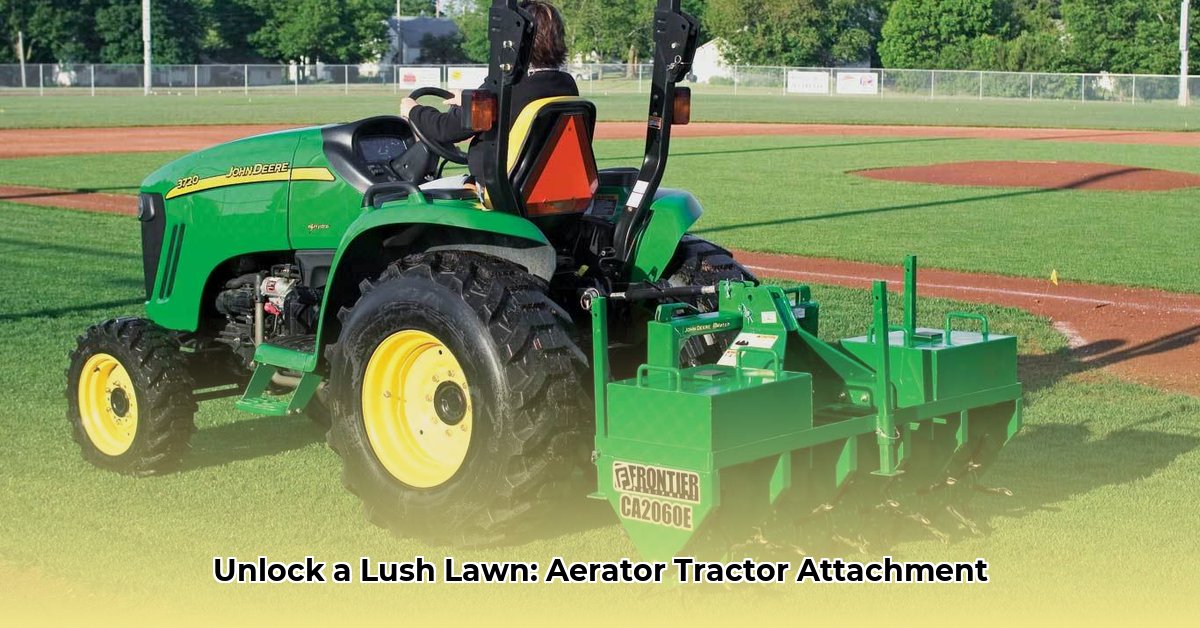
Lawn Aerator Tractor Attachments: Revitalizing Your Lawn's Health
A healthy, vibrant lawn isn't just aesthetically pleasing; it's a testament to proper lawn care. One often-overlooked technique for achieving this lush landscape is aeration, and using a tractor-mounted aerator significantly increases efficiency and effectiveness. This comprehensive guide will equip you with the knowledge and skills to successfully aerate your lawn using a tractor attachment, leading to a healthier, more resilient turf. For more information on tractor-mounted aerators, check out this helpful resource: Tractor Aerator Supplies.
Understanding Core Aeration: The Science of Soil Improvement
Compacted soil acts like a barrier, preventing water, oxygen, and nutrients from reaching grass roots. This leads to stunted growth, vulnerability to diseases, and an overall unhealthy lawn. Core aeration addresses this problem by removing small plugs of soil, creating channels that improve air circulation, water infiltration, and nutrient uptake. This is drastically different from spike aeration, which only creates much smaller, less impactful holes. Why is this important? Because healthy roots translate directly into a stronger, more vibrant lawn. Have you ever noticed how much easier it is to water a well-aerated lawn?
Choosing the Right Aerator: A Guide to Tractor Attachments
Selecting the appropriate aerator attachment hinges on several factors: your lawn's size, soil type, and budget. Several types exist, each with unique advantages and disadvantages. Here's a comparison to help you make the best choice:
| Aerator Type | Pros | Cons | Ideal Lawn Conditions |
|---|---|---|---|
| Xtreme (Solid Tine) | Extremely durable, ideal for heavily compacted soil, excellent deep aeration | Can be pricier, requires a powerful tractor, may need more frequent maintenance | Large lawns with hard-packed or clay-based soil |
| Drum (Hollow Tine) | Efficient, creates larger holes for improved air and water penetration | Might not be as robust as solid tines, potential for clogging issues | Moderate-sized lawns with moderately compacted soil |
| Spike Aerator | Affordable, easy to use, good for light thatch removal | Less effective than core aeration; only creates small, shallow holes | Small lawns with light thatch and minimal soil compaction |
For large lawns with compacted soil, an Xtreme aerator offers superior performance. However, for smaller lawns with less compacted soil, a drum aerator might suffice. Spike aerators are best suited for minor thatch issues. But remember, core aeration offers the most significant soil improvement.
Preparing Your Lawn: Essential Pre-Aeration Steps
Before you begin, some preparatory steps maximize aeration effectiveness:
- Mow Your Lawn: Cut your grass to a height of 2-3 inches. This ensures optimal aerator access to the soil.
- Clear Debris: Remove any large objects like rocks, sticks, or toys that could damage the equipment or your lawn.
- Check Soil Moisture: Aerate when the soil is moist but not waterlogged. Avoid aerating on very dry or very wet soil.
Step-by-Step Aeration Guide: Mastering the Technique
Follow these steps for efficient and safe aeration:
- Attachment: Securely attach the aerator to your tractor, adhering strictly to the manufacturer’s instructions. Proper attachment is crucial for safety and performance.
- Depth Setting: Adjust the depth based on your soil type and compaction level. Start shallow and gradually increase as needed.
- Overlapping Passes: Overlap each pass by approximately 50% to ensure complete coverage. This guarantees consistent aeration across your entire lawn.
- Steady Pace: Maintain a slow, consistent speed to prevent uneven aeration and potential equipment damage. Rushing this step can reduce efficacy significantly.
- Safety First: Always wear safety glasses and sturdy footwear.
Post-Aeration Care: Nurturing Your Newly Aerated Lawn
After aeration, your lawn needs some TLC:
- Water Thoroughly: Water gently but thoroughly to settle the soil and assist root recovery.
- Overseed (Optional): Consider overseeding to improve lawn density, particularly in bare patches. This is a great opportunity to improve your turf's overall health and appearance.
- Minimize Foot Traffic: Reduce foot and vehicle traffic for a few days to prevent soil recompaction.
Seasonal Aeration Strategies: Optimizing Timing for Best Results
The optimal time for aeration varies depending on location and climate. Autumn is often considered ideal in many regions due to cooler temperatures and increased rainfall, promoting quicker root establishment. However, spring aeration may be preferable in drier climates. Conduct thorough research on your local conditions for the most accurate timing.
Maintenance and Troubleshooting: Keeping Your Aerator in Peak Condition
Regular maintenance extends the lifespan of your aerator and ensures optimal performance:
- Cleaning: Thoroughly clean the aerator after each use to remove soil and debris.
- Lubrication: Lubricate moving parts as needed to prevent wear.
- Inspection: Regularly inspect tines for damage and replace any broken or bent pieces.
- Consult the Manual: Refer to the owner’s manual for troubleshooting and detailed maintenance instructions.
Conclusion: A Healthier Lawn, a Happier You
Investing in a lawn aerator tractor attachment is an investment in a healthier, more beautiful lawn. By following this guide and performing routine maintenance, you'll enjoy a lush, vibrant lawn for years to come. The initial investment pays long-term dividends in a reduced need for increased watering, less fertilizer, and a reduced likelihood of turf diseases.